

A Complete Look at Growth, Challenges, and the Future (2019–2025)
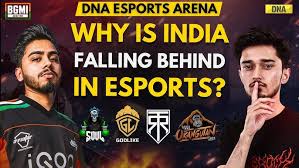
Over the last few years, esports in India has become one of the most talked-about topics in the gaming community. From packed stadium events and million-view livestreams to sudden game bans and struggling teams, the industry has experienced rapid highs and unexpected lows. This has led many fans, players, and newcomers to ask an important question: Is esports still rising in India, or is it slowly losing momentum?
The reality is more balanced than most people think. Esports in India is not dying. At the same time, it is not growing at the same speed everywhere. Instead, the industry is evolving, stabilising, and slowly building a stronger foundation for the future.
The Early Growth Phase: 2019 to 2020
Before 2019, esports in India existed mainly in small communities. Competitive gaming was present, but it was limited to LAN cafés, college events, and a few online tournaments. Things changed quickly after 2019.
Mobile gaming played a major role in this transformation. Games like PUBG Mobile and Free Fire became extremely popular because they worked smoothly on budget smartphones and required low internet speed. This made competitive gaming accessible to millions of Indian players across cities and small towns.
By 2020, esports tournaments had become regular online events. The COVID-19 lockdown pushed even more people towards gaming and streaming. Viewership on platforms like YouTube and Facebook Gaming increased sharply. New esports teams were formed, content creators gained popularity, and prize pools started growing.
This period created a strong belief that esports could become a major industry in India.
The Pandemic Boom: 2020 to 2021
The pandemic years were the golden phase of Indian esports growth. With people stuck at home, gaming became a major source of entertainment. Esports tournaments moved fully online, and participation increased rapidly.
During this time, the Indian esports market grew significantly. Reports showed strong growth in revenue, players, teams, and viewers. Many young gamers began to see esports as a serious career option.
PUBG Mobile and Free Fire dominated the scene. Large tournaments attracted lakhs of viewers, and top players became internet celebrities. Sponsorship deals increased, and several esports organisations expanded their teams.
By the end of 2021, esports in India was considered one of the fastest-growing gaming markets in Asia.
The First Big Setback: Game Bans and Uncertainty
In late 2020 and 2021, the ban on PUBG Mobile created the first major shock for Indian esports. Since most tournaments depended on this one title, the entire ecosystem was affected.
Many teams lost their main game. Tournament organisers cancelled events. Sponsors paused investments. Several players were forced to quit competitive gaming or shift to content creation.
When BGMI was later launched as a replacement, the scene recovered partially. However, another temporary ban on BGMI again created instability.
This period taught the industry an important lesson — depending on only one or two games is risky.
Slowdown and Reality Check: 2022 to 2023
After the initial hype, esports in India entered a slower phase.
Funding became difficult. Some organisations shut down due to a lack of sponsorship. Smaller tournaments disappeared. Only a few big teams managed to survive comfortably.
At the same time, players realised that only top-level professionals could earn stable incomes. For most aspiring gamers, esports remained uncertain.
This created the feeling that esports in India was declining. Social media discussions often claimed that the scene was “dead” or “dying”.
But in reality, the industry was not collapsing — it was simply correcting itself after a fast and unrealistic growth phase.
Stabilisation and Recovery: 2024 to 2025
From 2024 onwards, esports in India began to stabilise again.
BGMI returned officially. Free Fire remained active. Large tournaments like national championships and invitational events brought back excitement. Prize pools increased, and viewership numbers slowly improved.
At the same time, the industry started diversifying.
Colleges began hosting esports competitions. State-level events included esports as an official category. Multi-game tournaments became more common. Brands slowly returned as sponsors.
Big companies also showed interest in esports partnerships, media rights, and grassroots development.
This phase marked a shift from fast hype-based growth to long-term ecosystem building.
Is Growth Only Limited to BGMI and Free Fire?
BGMI and Free Fire indeed remain the backbone of Indian esports. They have the largest player base, the highest audience numbers, and the biggest prize pools.
However, esports growth in India is no longer limited to only these two games.
Several other titles are now building competitive communities:
- Valorant has become the strongest PC esports title in India, with regular tournaments and regional leagues.
- Call of Duty Mobile continues to host competitions with a dedicated fan base.
- EA FC (FIFA) and eFootball attract football fans into competitive gaming.
- Fighting games like Tekken and Street Fighter have small but passionate communities.
- Chess esports has gained popularity after India’s success in international chess competitions.
Indian teams are also participating in international tournaments in games like Pokémon Unite, Apex Legends, and strategy titles.
While these scenes are smaller than mobile battle-royale esports, they are growing steadily and adding diversity to the ecosystem.
Why It Sometimes Feels Like Esports Is Not Growing
Many people feel esports is slowing down because growth today looks different from the early boom years.
Earlier, everything was new — new teams, new tournaments, new streamers. Now, the industry is more selective and professional.
Some reasons behind this feeling include:
- Fewer low-level tournaments than before
- Limited sponsorship for small teams
- High competition among players
- Slow career progress for beginners
But this phase is natural in any developing industry. It shows that esports in India is moving towards quality, sustainability, and professionalism instead of uncontrolled expansion.
Current Market Situation and Future Outlook
By 2025, the Indian esports market is expected to reach several hundred crores in value. Player numbers, teams, and viewership continue to increase gradually.
Mobile esports still leads the market, but PC and console esports are growing slowly. More colleges, training academies, and content platforms are supporting competitive gaming.
Esports is also gaining recognition from government bodies, educational institutions, and mainstream media.
The future of Indian esports looks positive, but realistic. Growth will continue, but success will depend on:
- Strong tournament structures
- Better player development systems
- More diverse game titles
- Stable sponsorship models
- Support for grassroots players
Conclusion: Is Esports Still Rising in India?
The answer is clear — yes, esports is still rising in India, but in a more mature and balanced way.
From 2019 to 2021, the industry experienced explosive growth. From 2022 to 2023, it faced challenges and slowdowns. From 2024 onwards, it will be rebuilt with better planning and wider game diversity.
Esports in India is no longer just about one or two games. It is slowly becoming a multi-game, multi-career industry with long-term potential.
For players, fans, and content creators, this is not the end — it is only the next stage of India’s esports journey.
